
Prop Firm Buffer Rule India: What It Means, Why It Exists, and How Traders Should Think About Payouts
If you trade funded accounts in India, you will eventually hear the term:
“Buffer rule.”
Some traders think it is a scam. Others think it is a payout restriction. Most traders simply do not understand what it actually means.
The truth is simpler:
A buffer rule is a risk protection mechanism.
And whether a platform enforces it officially or not, traders should understand the logic behind it.
This article explains:
- What a buffer rule is
- Why prop firms use it
- How it impacts payouts
- The withdrawal mistake that wipes many Indian traders
- How Market Rush approaches risk differently
What Is a Buffer Rule in a Prop Firm?
A buffer rule means:
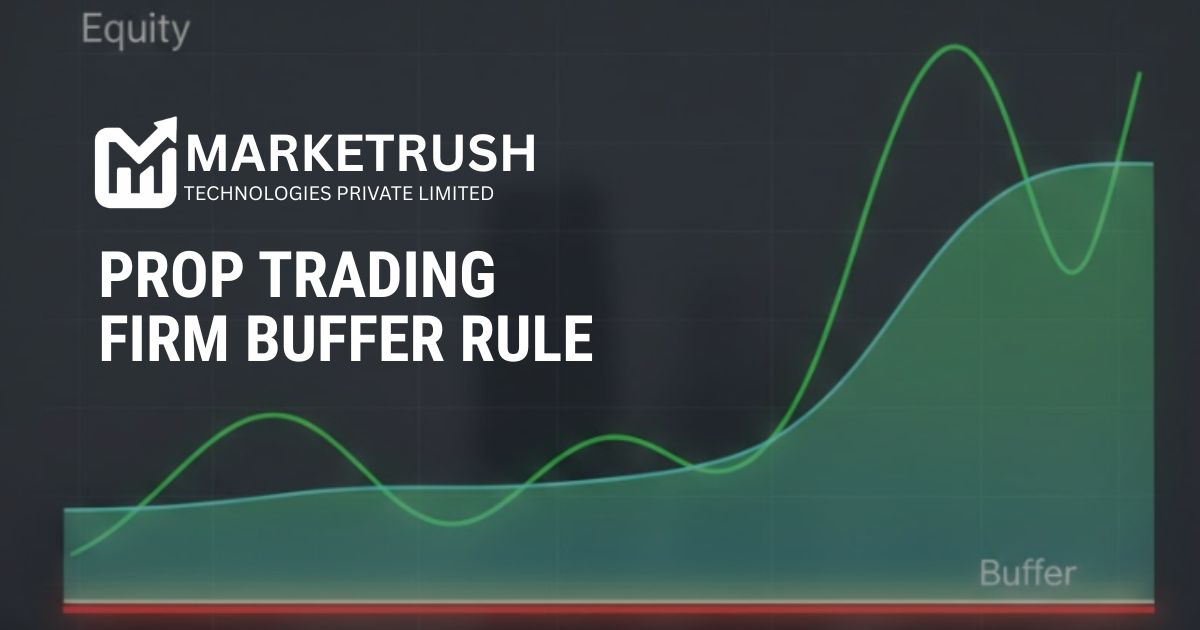
A trader must maintain a profit cushion above the drawdown limit before withdrawing.
It creates a safety gap between:
- Your current account high
and - Your maximum loss threshold
In simple terms:
The firm wants you to build a cushion before taking money out.
Buffer Rule Example (Simple)
Imagine:
- Account size: ₹1,00,000
- Max drawdown: 10%
- Loss limit: ₹90,000
Now you make ₹12,000 profit.
Your equity becomes:
₹1,12,000
A firm with a buffer rule may say:
- You can withdraw only the amount above the buffer
- The first ₹10,000 stays as protection
So even if you withdraw, the firm ensures you still have room to survive volatility.
Why Do Firms Use Buffer Rules?
Prop firms are not trying to punish traders.
They use buffer rules because:
1. Traders Withdraw Too Aggressively
Many traders withdraw everything the moment they get paid.
Then one bad week wipes the account.
2. Indian Index Volatility Is Brutal
NIFTY options can swing hard, especially on expiry.
Without a cushion, drawdowns hit fast.
3. Firms Want Longevity, Not One-Time Payouts
The best funded traders are stable.
Buffer rules reward consistency, not quick extraction.
The Withdrawal Mistake That Ends Most Funded Accounts
Here is the pattern:
- Trader makes profit
- Trader withdraws the full amount
- Account balance returns close to the drawdown floor
- A normal losing streak violates max loss
- Account is gone
- Passing again is difficult
This is why many professional traders do not withdraw everything.
They treat withdrawals strategically.
Fixed Drawdown Platforms Still Benefit From a “Self Buffer”
Not every platform enforces a buffer rule.
Some platforms (like Market Rush) use:
- Fixed drawdown
- Clear max loss limits
- No forced payout buffer rule
But the math remains real:
If your max loss is 10%, then withdrawing everything reduces your survival margin.
Example: Why Leaving Profits Helps Survival
Let’s say:
- Fixed drawdown limit: 10%
- Account fails after ₹10,000 loss
Scenario A: Withdraw Full Profit
You earn ₹10,000 → withdraw ₹10,000
Now you are back near the loss threshold.
A 10% drawdown wipes the account quickly.
Scenario B: Leave Half as Cushion
You earn ₹10,000 → withdraw ₹5,000
₹5,000 remains inside the account.
Now you have more room to absorb volatility without breaching drawdown.
That remaining profit acts as a personal buffer.
Common Prop Firm Risk Rules Traders Should Know
| Rule Concept | What It Means for Traders |
|---|---|
| Buffer Rule | Requires a profit cushion before withdrawals are allowed. |
| Fixed Drawdown | Loss limit stays constant from the starting balance. |
| Max Total Loss | Breaching the overall drawdown ends the account. |
| Max Daily Loss | One impulsive day can fail the evaluation instantly. |
| Rewards Account Cushion | Leaving profits inside increases survival against volatility. |
Market Rush and the “No Buffer Rule” Approach
Market Rush does not enforce a formal buffer rule.
Instead, it focuses on:
- Transparent fixed drawdown
- Indian index-specific evaluation logic
- Simple risk boundaries without hidden payout restrictions
However, traders should still think professionally:
Leaving some profits in the rewards account improves long-term survival.
Because passing evaluations again is harder than protecting what you have already earned.
The Professional Mindset: Withdraw Smart, Not Maximum
Funded trading is not about extracting every rupee immediately.
It is about staying funded long enough to build repeatable payouts.
A disciplined trader asks:
- How do I survive drawdowns?
- How do I avoid reset risk?
- How do I protect the account?
Not just:
- How much can I withdraw today?
Final Thoughts: Buffer Rules Are About Survival
A buffer rule is not a trick.
It is a reminder:
Profit is not safety unless it stays inside the account long enough to protect you.
Even without an official buffer rule, traders should create their own cushion.
Because in Indian index trading, volatility is guaranteed.
And survival is the real edge.
Related articles
How Order Fills Work: Market Depth, Bid/Ask Liquidity & Slippage
Learn how buy and sell orders are filled from market depth, why larger orders execute at multiple prices, and how slippage is created and calculated.
23 Aug 2026
PaperTradingApp Review: Best App to Practice Trading Free
Master trading before risking real money. Read our PaperTradingApp review and start practicing free with real-time market data today.
20 Aug 2026
Nifty Prop Firm Checklist: 9 Questions to Ask Before You Pay Anything
Most Indian traders evaluate prop firms on profit split and account size alone. This checklist covers the nine questions that actually determine whether a funded account is worth your time and money.
08 Mar 2026
All information provided on this site is intended solely for educational purposes related to financial markets and does not serve as investment advice or recommendations. Market Rush provides evaluation and educational tools only and does not act as a broker, investment adviser, or deposit-taking platform. Guest articles, reviews, and other third-party contributions reflect the views, claims, and opinions of their respective authors or contributors and do not necessarily represent the views, endorsement, or independent assessment of Market Rush.